Pay per call vs pay per lead: what each model pays for
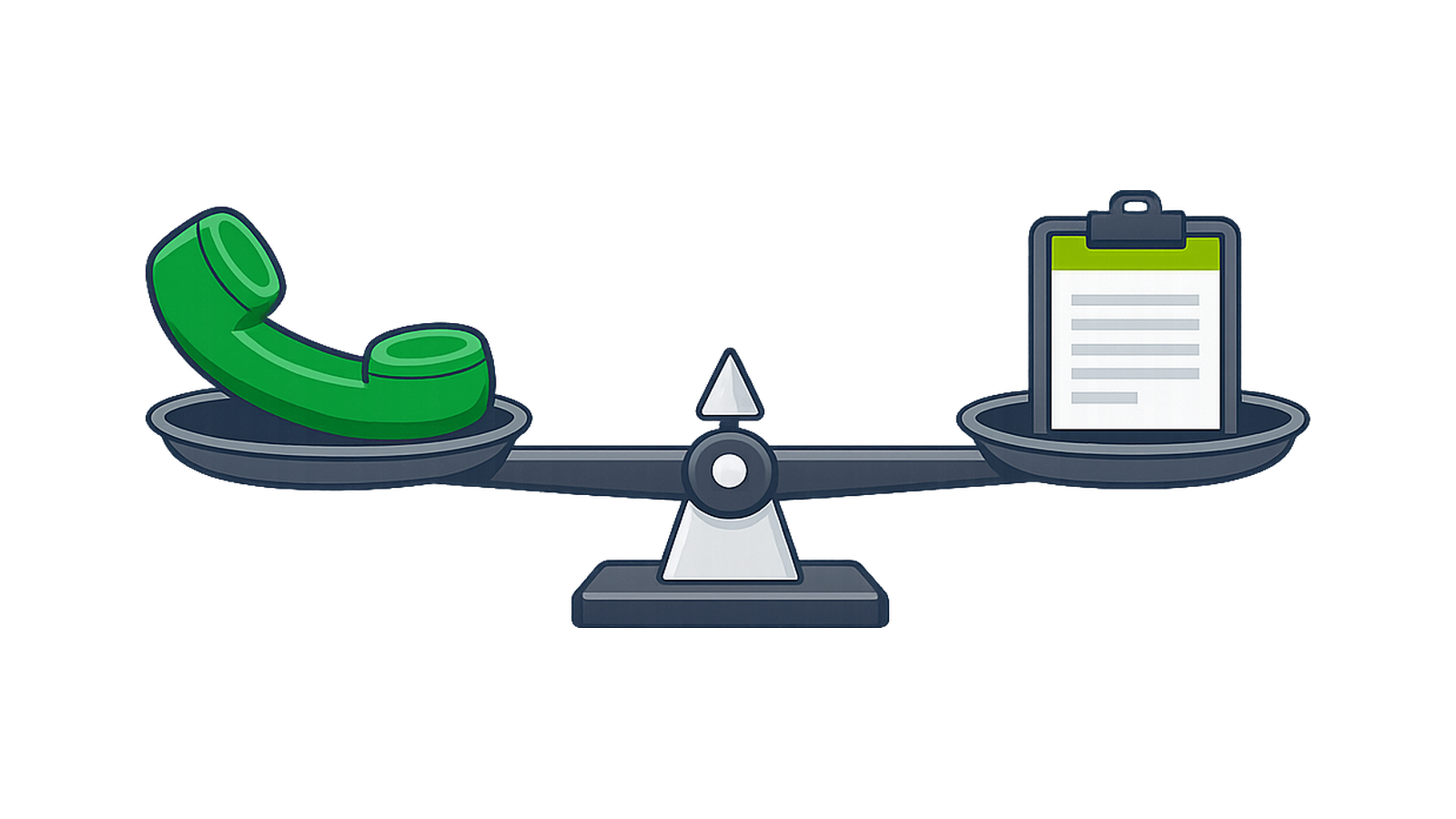
Pay per call and pay per lead are two ways to price performance marketing. In pay per call, the buyer pays for a qualified phone call. In pay per lead, the buyer pays for a lead: a consumer's contact details, usually from a web form.
Performance marketing means the buyer pays only when a specific result happens. The two models differ in which result that is, and in who carries the risk until it happens.
The short answer
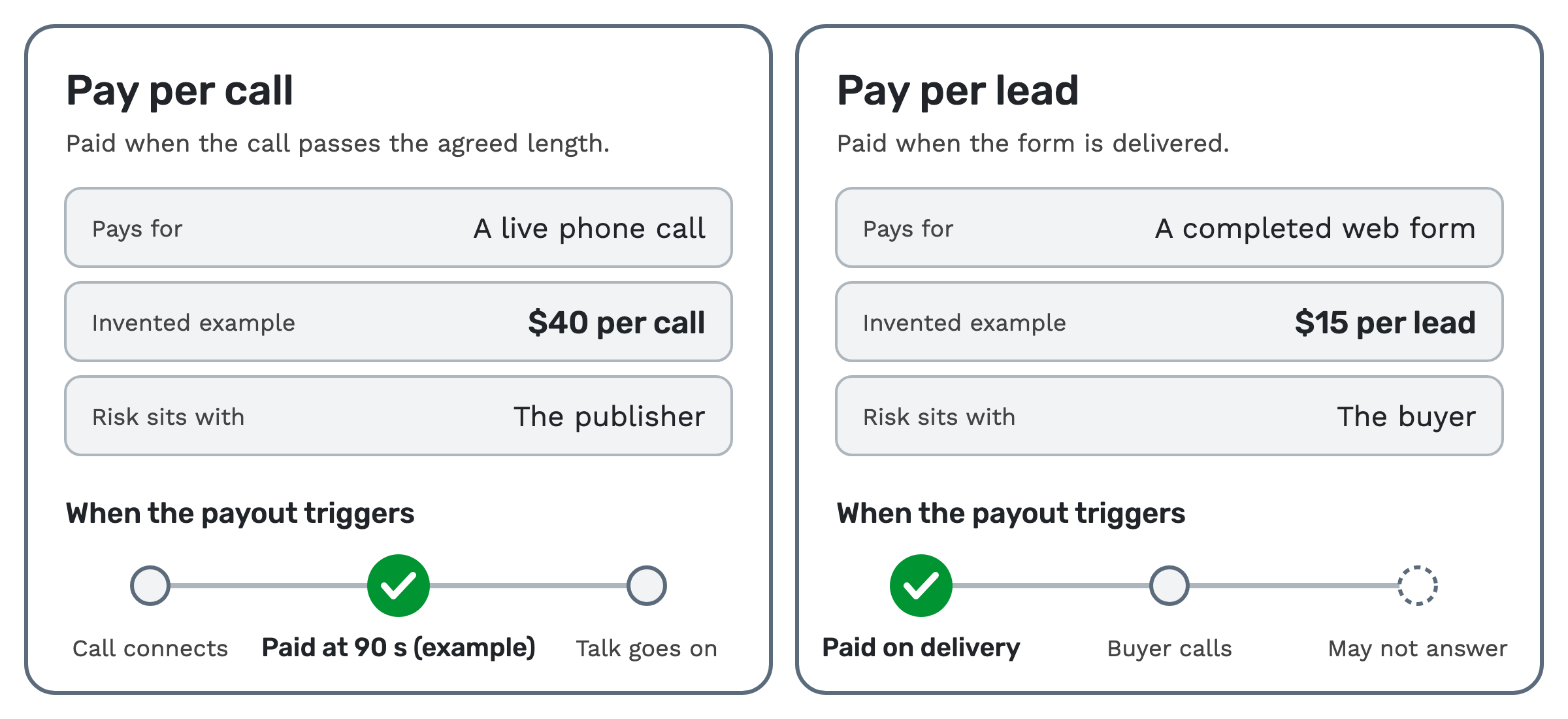
- Pay per call pays for a conversation. The payout triggers when a call meets rules agreed in advance, such as a minimum length.
- Pay per lead pays for a form fill. The payout triggers when the lead is delivered, before anyone has spoken.
- The risk moves. In pay per lead, the buyer carries the risk of never reaching the person. In pay per call, the publisher carries the risk of a call that doesn't qualify.
Why the two models exist
A buyer, or advertiser, is the business that answers the call or works the lead. A publisher, or traffic source, is the affiliate or site that produces the consumer.
Both models let the buyer pay for results instead of attention. The buyer pays nothing for an ad someone scrolled past. The difference is how far along the consumer must be before money changes hands.
How pay per lead works
1. The consumer fills in a form. They give a name, a phone number and a few details, such as a zip code or what they need.
2. The publisher delivers the lead. The lead goes to the buyer, often within seconds.
3. The payout is owed. The payout, what the publisher earns, is set per lead. In an invented example, $15.
4. The buyer makes contact. The buyer's team calls, texts or emails the lead. Some leads answer. Some never do.
Lead deals usually agree in advance which leads a buyer can reject, such as a wrong number or a duplicate.
How pay per call works
1. The consumer calls. They dial a tracking number from an ad or a page. A tracking number is a phone number that shows where the call came from. Inbound call tracking covers how it works.
2. The call routes to a buyer. Routing skips buyers that are closed, at their caps, or excluded by filters. The best remaining buyer gets the call.
3. The call has to qualify. The most common rule is billable duration: the minimum number of seconds a call must last to be paid. The caller's location and the buyer's hours are common rules too.
4. The call converts. A call that meets the rules is a conversion, and the payout is owed. In an invented example, $40 for a call over 90 seconds. A caller who hangs up at 20 seconds earns nothing.
What the buyer is really paying for
| Pay per call | Pay per lead | |
|---|---|---|
| What's sold | A live phone call | A consumer's contact details |
| When the payout triggers | The call meets the agreed rules | The lead is delivered |
| Contact with the consumer | Already happening | Still to come |
| Who carries the risk | The publisher: a short call isn't paid | The buyer: a lead that never answers is still paid |
| Example payout (invented) | $40 per qualified call | $15 per lead |
Per unit, a call usually costs more than a lead. That isn't the number to compare. Compare what each conversation costs you.
Say a buyer pays $15 per lead and reaches one lead in three. Each conversation costs $45 in payouts. At $40 per qualified call, each conversation costs $40. These figures are invented; your own contact rate decides the sum.
Why buyers pay more for a call
A call is a bigger step than a form. The consumer stopped what they were doing, picked up the phone and chose to talk.
The conversation also starts while their interest is at its peak. A lead has to be reached later, and the person may not pick up.
That's why calls suit purchases where people want to ask questions first: insurance, home services, legal help and financial products. One conversation can answer the questions, build trust and close the sale.
When pay per lead is the better fit
Pay per lead isn't the weaker model. It fits better when:
- Nobody can answer live. A call needs someone on the line now. A lead can wait for the team's next shift.
- The sale doesn't need a conversation. If an emailed quote closes the deal, paying for a phone call adds cost.
- The buyer wants to set the pace. A team that follows up by text, email and phone on its own schedule gets more from a lead.
- Interest arrives after hours. A call outside the buyer's hours often won't qualify. A lead collected overnight can be worked in the morning.
Pay per call fits better when the buyer can answer during set hours, the sale needs a conversation, and speed matters.
You don't always have to choose: lead to call
Many campaigns use both. A lead comes in from a form and is turned into a call within minutes. This is lead to call: the lead starts the contact, and the call is the conversation.
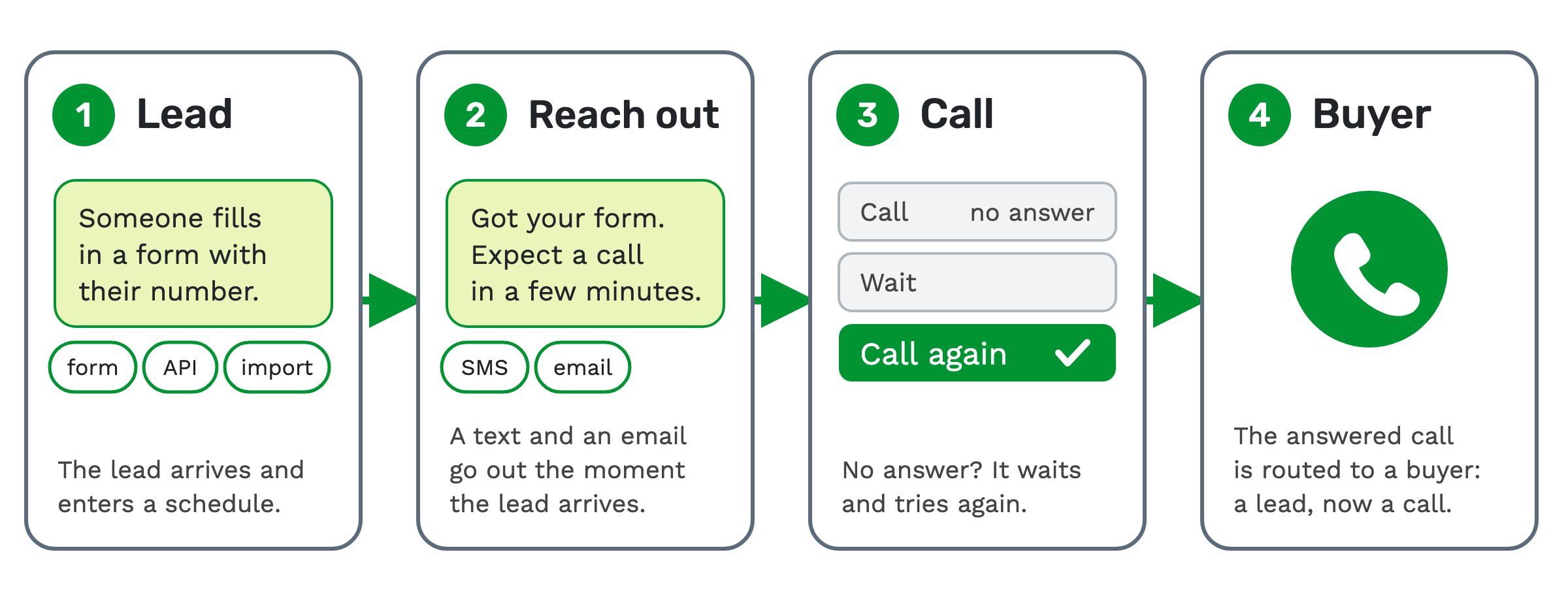 TrackDrive's lead automation runs a schedule you build on each new lead, within its daytime hours. A schedule is an ordered list of actions. It can send an SMS and an email, wait, then call the lead and route the call to a buyer.
The lead automation dashboard shows leads created, contacted and converted. It also shows revenue, payout, margin and revenue per lead, broken down by offer, schedule, channel, buyer and agent.
How calls and leads are tracked in TrackDrive
Revenue is what the buyer pays for a call. Payout is what the traffic source earns for it. TrackDrive records both on every call, and the call log shows them with the margin.
- Call conversions. A call converts when it meets the buyer's conversion rules, such as a minimum number of seconds you set. It can also convert when the buyer reports it by postback, a server-to-server message.
- Press 1 to accept. If the buyer must press 1 to take a call, the duration timer starts when they press it.
- Payouts. A traffic source's payout can be a fixed dollar amount per conversion. It can also be a percentage of what the buyer pays.
- Leads in. Leads arrive through the API (for example from a web form), a CSV upload, a ping-post integration or an inbound call.
- Bidding. Ping-post works for leads and calls: buyers bid before the lead or call is committed.
The buyer conversions article explains the rules, and how pay-per-call works follows one call from start to finish.
What it costs on TrackDrive
The payouts above pass between buyers and publishers. TrackDrive's own pricing is separate and usage-based.
Each tracking number has a monthly rate, and inbound calls have a per-minute tracking rate. That rate includes forwarding the call to your buyer over toll-free or SIP; international and premium rate centers can add cost. There's no onboarding fee. See TrackDrive pricing for commit plans.
Questions people ask
Is pay per call better than pay per lead? Not in every case. It depends on the product and how people prefer to buy it. Calls suit a sale that needs a conversation; leads suit a team that follows up on its own schedule.
Who sets the billable duration? The buyer and the publisher agree on it before the first call. In TrackDrive, it's set as the buyer's conversion rule, part of buyer management.
Can a lead campaign become a call campaign? Yes. With lead to call, each lead is contacted by the schedule you build, within its calling hours, and the answered call is routed to a buyer.
What should I check before picking a platform? What to look for in pay per call software lists the questions to ask.
See it in action
Request a demo for a live walkthrough tailored to your use case, or start free, with no credit card and no onboarding fee.